5 Common Team Problems

And How To Fix Them Using Belbin.

The Problem with Teams...

When team problems arise, they aren’t typically caused by a lack of skill or experience.  Whether it’s poor communication, slow decision making, lack of delivery, or ongoing conflict. More often, the root cause is behavioural gaps or imbalance.

But if you ask most managers what’s holding their team back, you’ll very rarely hear:

“We don’t have the right mix of Belbin Team Roles.”

Instead, you’ll hear things like:

“We’ve too many ideas and nothing gets finished.”

“There’s friction between individuals.”

“Decisions seem to take forever.”

“People aren’t pulling in the same direction.”

In other words, team performance issues are usually described by their symptoms, not their causes.

To this end, Belbin Team Roles provides a practical and highly effective solution. Rather than focusing on personality types, job titles or hierarchy. Belbin looks at how people actually behave when working in a team. In essence, their individual and collective behavioural combinations and contributions.

Furthermore, when you view dysfunctionality within a team from this perspective, predictable patterns emerge.
Team Problems
Belbin Downward Trend

Why Teams Struggle: The Real Cause of Team Problems

Most teams are built around technical expertise, experience and knowledge. Sensible enough on paper. However, what’s often overlooked is how people behave in real life. Especially when working under pressure, facing deadlines and competing priorities.

That’s when common team problems often surface:

  • Duplication of effort
  • Gaps in responsibility
  • Ideas that go unchallenged
  • Conflict caused by misunderstanding rather than intent

In short, teams rarely fail because they lack capability. They can struggle because of behavioural gaps or imbalance.

Belbin helps organisations identify:

  • Which behavioural roles are overrepresented
  • Which role are underrepresented
  • Which roles may be missing entirely

5 Common Problems in Teams

Let’s look at a few short case studies of common team problems. And try to understand what may be going on beneath the surface and how to address this.

Belbin Ideas

Too Many Ideas. Not Enough Delivery

A classic issue in many teams: plenty of energy, creativity and discussion…but inconsistent delivery and results.

What it looks like:

  • Constant idea generation
  • Projects started not finished
  • Frequent shifts in direction
  • Growing stakeholder frustration


What may be happening:

The team may be rich in Plant and Resource Investigator behaviour; creative, imaginative, and outward-looking. All valuable strengths. However, the issue isn’t the presence of ideas or discussion. It’s typically the absence of delivery-focused roles, such as:

  • Implementers – who turn ideas into action
  • Completer Finishers – who ensure tasks are completed to a high standard


How Belbin helps:

  • Identifies where creative strengths exist
  • Highlights gaps in execution and follow-through
  • Enables better balance between ideas and delivery
  • Provides practical ways to address role gaps


In conclusion:

Basically, ideas only create value when they’re delivered. Otherwise, they can remain well-intentioned conversations.

Belbin Ideas

Lack of Challenge, Direction or Momentum

Some teams are enjoyable to work in; collaborative, supportive and agreeable. Problem being, they may be a little too agreeable?

What it looks like:

  • Quick agreement in meetings
  • Slow progress or lack of urgency
  • Avoidance of difficult conversations
  • Momentum only appears during crises


What may be happening:

There may be a shortage of:

  • Shaper behaviour (drive, challenge, urgency)
  • Monitor Evaluator behaviour (objective analysis and critical thinking)


When these roles are lacking, teams may drift. Not always dramatically, but often consistently.

How Belbin helps:

  • Assesses levels of challenge and critical thinking within the team
  • Encourages constructive challenge in decision making
  • Helps leaders empower individuals to adopt more directive behaviours
  • Strengthens clarity and pace in execution


In conclusion:

Unless someone in the team is regularly asking, “What are we actually going to do?”, progress may stall.

Decision making Belbin

Poor or Ineffective Decision Making

Problems in teams can arise due to making decisions too quickly, or never quite getting there. As a result, performance can suffer.

What it looks like:

  • Over-analysis or rushed decisions
  • Repeatedly revisiting the same issues
  • Lack of clear rationale or objectivity
  • Risks either ignored or overemphasised


What may be happening:

Effective decision making not only requires strong leadership, but also some balance between roles, including:

  • Creativity (Plant)
  • Analysis (Monitor Evaluator)
  • Action (Shaper / Implementer / Completer Finisher)

In essence, if any particular style dominates, decision quality often declines.

How Belbin helps:

  • Reveals how team decisions are likely to be approached
  • Identifies gaps in creativity, analysis, challenge, execution or delivery
  • Supports more structured and balanced decision making processes
  • Ensures different perspectives are represented for a balanced, objective view


In conclusion;

To explain; the best decisions don’t normally come from one dominant or decisive behavioural style, like a Shaper. They come from tapping into a more balanced contribution, with clear role accountability that plays to strengths.

Belbin Attention to Detail

Lack of Follow Through and Attention to Detail

Everything on the project looks on track…until the final stretch.

What it looks like:

  • Tasks not always fully completed
  • Details missed
  • Deadlines slipping
  • “Almost there” is the norm


What may be happening:

The problem is the team may lack sufficient Completer Finisher behaviour; High attention to detail, accuracy and discipline to finish tasks.

Without this, quality of delivery can suffer.

How Belbin helps:

  • Identifies gaps in detail-focused roles
  • Highlights where accountability may needs strengthening
  • Supports better allocation of final-stage roles and responsibilities
  • Prevents over-reliance on the same individuals


In conclusion;

As an illustration; When running a marathon, it’s often the last few yards that determines the winner. 

In the same way, teams that fail to deliver the last 5%…can fail to deliver. Full stop.

Belbin Conflict

Conflict Between Team Members

Often labelled as a “personality clash”. In reality, it rarely is.

What it looks like:

  • Friction between individuals
  • Misinterpretation of intentions
  • Frustration with communication styles
  • Underlying or escalating tension


What may be happening:

Different Belbin Team Roles bring different strengths, allowable and non-allowable weaknesses.

For example:

  • Shapers may appear blunt or impatient
  • Teamworkers may avoid confrontation
  • Monitor Evaluators may seem overly critical


These are not flaws. They are predictable by-products of Team Role strengths. Especially with over used strengths.

The real issue arises when:

  • Differences are not understood or valued
  • Behaviour is misinterpreted
  • People display non-allowable weaknesses (e.g. cynical not sceptical)


How Belbin helps:

  • Creates a shared language for discussing and understanding behaviour
  • Provides objective insight into individual working styles
  • Clarifies strengths and weaknesses at individual and team level
  • Reduces misunderstanding and unnecessary conflict


In conclusion:

By applying Belbin, conversations can shift from “They’re difficult to work with”…to “I understand our differences and how they contribute to the team.”

And if we can shift the focus in the way, we can build better understanding and significant impact.

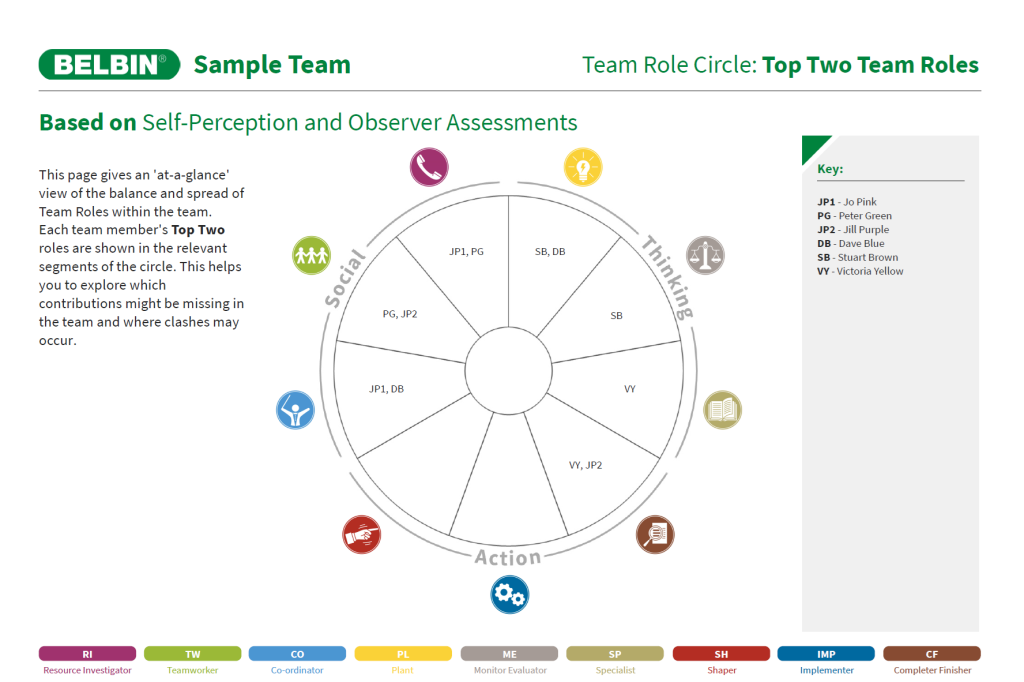
Belbin Report - Team

How Belbin Helps to Identify and Solves Team Problems

To explain; Belbin isn’t about labelling people behaviourally. It provides a structured, evidence-based understanding of:

  • How individuals behave in a team
  • What they naturally contribute
  • Their mix of team roles
  • Where duplication, gaps and overlaps exist


By using a variety of Belbin Reports combining self-perception and observer feedback, organisations can:

9 Belbin Team Roles

Team Problems - The Bottom Line

On the whole, most team problems are not random. They are often predictable outcomes of behavioural gaps or imbalance.

The good news? That makes this a solvable problem, through the effective application of Belbin Team Roles.

To conclude; Belbin provides insight to help you understand what’s really happening in your team. And the practical tools you need to identify and problems in your team.

Ready to improve your Team’s performance?

Want to understand your own Team Role profile?